
Make Pool Decks Less Slippery With CDC Backed Cleaning for Homeowners
Clean the deck first to strip away the algae, sunscreen film, and mineral scale causing most of the slip risk, then fix any drainage or cracking problems before applying a substrate-matched anti-slip coating or overlay. Mats and water shoes buy you time while you plan the permanent fix. Always test any coating on a small patch and follow its cure instructions before treating the whole deck.
TL;DR:
- Temporary measures like drain-through mats, water shoes, and anti-slip tape can reduce slip risks while planning permanent fixes, but require regular inspection and maintenance.
- Most slippery pools are caused by grime buildup, such as algae or biofilm, rather than surface deterioration, making thorough cleaning crucial before applying treatments.
- Penetrating sealers work best on porous surfaces like natural stone and concrete, while film-forming coatings with grit are suitable for smooth tile or worn concrete.
- Surface failure from cracks or spalling requires resurfacing with textured overlays rather than simple coating applications for long-term durability.
- Drainage issues must be fixed before coating, as standing water and low spots significantly increase slip hazards regardless of surface treatments.
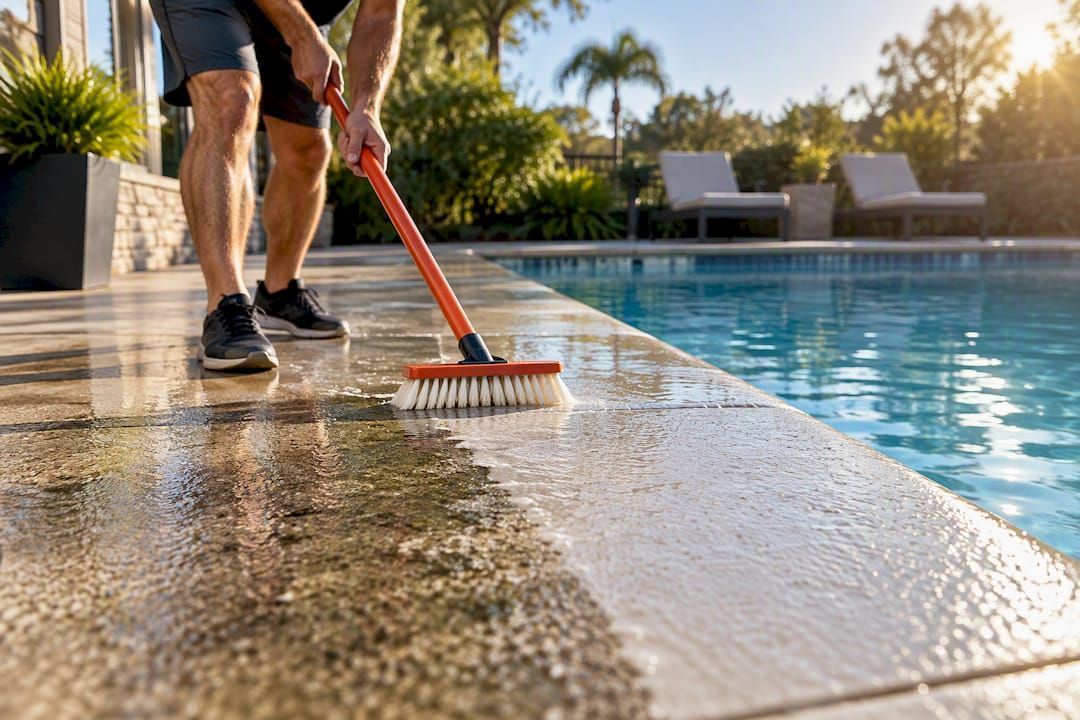
Table of Contents
- How Do You Make a Pool Deck Less Slippery Right Now?
- Is Your Pool Deck Slippery from Dirt or from the Surface Itself?
- What Non-Slip Sealer Works Best for a Pool Deck?
- When Should You Resurface Instead of Just Coating?
- Should You Grind, Blast, or Etch Your Pool Deck for Traction?
- Why Coatings Fail When Drainage Problems Go Unfixed
- How Often Should You Clean and Recheck a Pool Deck's Traction?
- Where Oceancarestore's Products Fit Into This Workflow
- What I've Learned Watching Homeowners Tackle This
- Ready to Start With the Right Cleaner and Sealer
- Sources
- FAQ
How Do You Make a Pool Deck Less Slippery Right Now?
You don't need a contractor to cut your risk today. A few cheap, temporary measures reduce slips while you plan the real fix.
- Drain-through mats work best at the steps, ladder area, and the main entry/exit path where feet are wettest and traffic is heaviest.
- Water shoes are worth requiring for kids and guests on smooth tile or worn concrete, especially right after a swim.
- Anti-slip tape helps on isolated trouble spots like a single slick step edge, but skip it on large open areas. It peels, traps grit underneath, and creates its own tripping hazard once the adhesive fails.
- Temporary anti-slip sprays can help in a pinch, but check the label. Some leave a hazy film on natural stone that's hard to remove later.
Inspect every mat weekly. Rubber-backed mats trap moisture underneath, and that's exactly where algae likes to grow, so lift them and rinse both sides. A mat curling at the edges is a trip hazard, not a safety feature. None of this replaces fixing the underlying surface. It just keeps people upright until you do.
Is Your Pool Deck Slippery from Dirt or from the Surface Itself?
Work through this quick checklist before you spend money on any product:
- Look for a greasy sheen or greenish tint. That's usually sunscreen residue mixed with algae or biofilm, not a surface defect.
- Check for a chalky white crust , especially near the waterline and on grout lines. That's calcium scale, common in areas with hard water.
- Run your hand across a dry section. If it feels smooth and glassy rather than textured, the surface itself may be worn down or the sealer coat has gone slick with age.
- Scrub a two-foot test section with a stiff brush and a pH-appropriate cleaner, rinse well, and let it dry. If it feels noticeably grippier once dry, contamination was your main problem, and the CDC's healthy swimming guidance specifically calls out scrubbing to remove slime as a maintenance action, not just a cosmetic one.
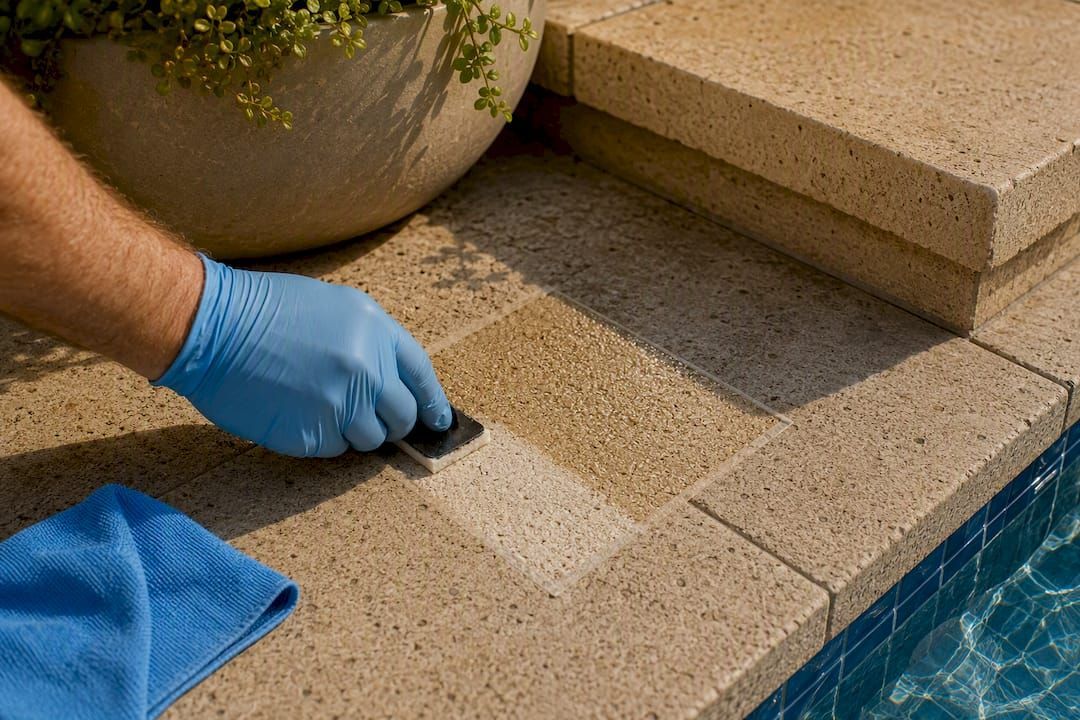
If scrubbing doesn't change much, you're likely dealing with a worn or failing surface, and cleaning alone won't fix that. Either way, before you commit to a coating, brush a small patch with the actual product you're considering and let it cure fully. Surface prep failure, meaning old sealer, soap film, or leftover contaminant under a new coating, is one of the most common reasons anti-slip treatments peel or flake within a season.
Pro Tip: Do the test patch in an inconspicuous corner near a planter or step edge, not the middle of the deck. If the product looks off or doesn't bond well, you want that mistake somewhere nobody notices.
Most slippery decks get blamed on the wrong cause. Homeowners assume the concrete or tile itself has gone slick, when the real problem is a layer of grime sitting on top of it.
What Non-Slip Sealer Works Best for a Pool Deck?
There's no single best coating that works for every surface. Concrete, tile, and natural stone each call for a different approach, and picking based on marketing language instead of substrate compatibility is how homeowners end up redoing this work twice.
Two basic categories cover most residential decks:
- Penetrating sealers soak into porous concrete or natural stone and don't build a film on top, so they preserve the surface's natural texture. These are usually the safer default for stone and grout, since a film-forming product on natural stone can trap moisture and cause discoloration.
- Film-forming coatings sit on top of the surface and are where anti-slip additives usually get mixed in. These work well on smooth concrete or tile but need more careful reapplication over time as the film wears.
Anti-slip additives, most commonly polymer grit, aluminum oxide, or fine silica, get broadcast into the wet coating or premixed at a supplier-specified ratio. Follow that ratio closely. Too little grit and you've got a slick spot waiting to happen; too much and the texture becomes uncomfortable underfoot, especially for bare feet and kids who spend all summer barefoot on the deck.
Broadcast evenly, back-roll to knock down clumps, and give the coating its full cure window before foot traffic, typically ranging from one to several days depending on the product. Independent traction testing matters more than a brand's own marketing claims when comparing options, since there's no universal industry standard for what counts as "non-slip" on a label.
When Should You Resurface Instead of Just Coating?
A thin coating can't fix a deck that's cracked, pitted, or worn down to bare aggregate. Once a surface is that far gone, resurfacing with a textured overlay is usually the better long-term investment, even though it costs more upfront than a bucket of sealer.
Three systems cover most residential and commercial pool decks:
- Polymer broadcast overlays spread aggregate into a bonding resin for a durable, textured finish that holds up well to sun and chlorine exposure.
- Epoxy slurry systems combine a binder with broadcast aggregate to create a flexible, skid-resistant surface when surface prep and quality control are handled correctly.
- Methyl methacrylate (MMS) overlays cure fast, even in cooler weather, and produce a low-permeability, skid-resistant finish that's popular for commercial pool decks and parking structures alike.
None of these systems perform well without proper groundwork. Decorative concrete guidance from the American Concrete Institute is blunt about this: surface preparation, aggregate selection, placement, and curing conditions determine whether the finish holds up or fails within a year. A skilled installer following that process will outlast a rushed DIY coating on a badly damaged deck, often by years.
Expect some downtime, typically a few days for prep and curing, and expect to pay more than a recoat. But repeated recoating over a failing substrate often leads to recurring issues and repeated expenses rather than a lasting fix.
Should You Grind, Blast, or Etch Your Pool Deck for Traction?
Mechanical texturing changes the surface profile itself instead of adding a coating on top, and it's a reasonable option when the concrete is structurally sound but simply too smooth or too slick from years of foot traffic and troweling.
- Grinding removes a thin layer with diamond pads, useful for leveling minor high spots and exposing a rougher profile underneath.
- Shot blasting fires small steel beads at the surface, opening up pores and creating a consistent texture across large areas quickly.
- Needle scaling works well on smaller or irregular areas, like step edges, where blasting equipment can't easily maneuver.
- Acid etching uses a mild acid solution to lightly roughen concrete, though it's the least aggressive method and won't do much for a heavily worn surface.
Mechanical texturing makes sense when the substrate itself is sound and just needs a rougher profile. If there's cracking, delamination, or spalling underneath, texturing alone won't fix the underlying problem and an overlay or structural repair comes first. Dust control matters here, both for your lungs and your pool water, so this is generally a job for a contractor with vacuum-shrouded equipment and proper respirators, not a weekend DIY project with a rented grinder.
Why Coatings Fail When Drainage Problems Go Unfixed
A coating cannot fix standing water. If your deck has low spots that hold puddles after every swim, no amount of grit or texture will keep that area from turning slick again within a season.
- Check for ponding by hosing down the deck and watching where water collects instead of draining toward a deck drain or the edge.
- Inspect drains for debris, sediment, or a broken grate that's blocking flow.
- Look for cracks or spalled concrete near drains and repair those before any new coating goes down, since a crack under a coating just reopens the same failure point.
- Confirm slope runs away from the pool and toward a drainage point. Model aquatic facility guidance built into public health codes calls for positive drainage and slip-resistant surfaces as baseline safety expectations, and that same logic applies at home.
Texture handles traction. Drainage handles the water film sitting on top of that texture. Skip the drainage fix and you're just delaying the same slick spot's return.
How Often Should You Clean and Recheck a Pool Deck's Traction?
Slip resistance isn't a one-time fix. It degrades gradually as sunscreen, body oils, and mineral scale build back up, so a maintenance rhythm matters as much as the initial treatment.
- Scrub high-traffic zones (steps, ladder area, entries) every one to two weeks during swim season, more often for heavily used commercial decks.
- Do a full deck scrub-down monthly to catch the slower calcium buildup that isn't obvious in a quick rinse.
- Walk the deck barefoot while wet every few months as an informal traction check, focusing on shaded or low-traffic areas where algae grows fastest.
- Reapply sealer or anti-slip coating on the manufacturer's recommended interval, often every one to three years depending on sun exposure and pool chemical use.
- Post temporary signage during any recoat or overlay cure, since a curing surface can be more slippery than usual until it fully sets.
For pool areas serving the public, or if you've had a fall and want documentation, commissioning ASTM or ANSI slip-resistance testing gives you a real number instead of a guess.
Pro Tip: Keep a simple log of when you last cleaned, sealed, or tested each section of the deck. It sounds excessive for a backyard pool, but it's the difference between catching a problem early and rediscovering it the hard way.
Where Oceancarestore's Products Fit Into This Workflow
Every step above needs the right chemistry behind it, and that's where product choice either helps or backfires. Oceancarestore's Pool Tile Maintenance Products line handles the cleaning stage, breaking down biofilm and calcium scale without the harsh acids that can etch grout or dull natural stone. If your deck test showed that chalky mineral crust, a dedicated calcium removal approach is worth running before any sealer goes down.
Once the surface is clean and dry, the Stone & Grout Sealers category is built for exactly the compatibility concerns raised earlier: plant-based, low-VOC formulas that won't trap moisture in porous natural stone. Always run a small test patch first, follow the label's cure window, and confirm the product is rated for your specific substrate before committing the whole deck.
What I've Learned Watching Homeowners Tackle This
The homeowners who get this right almost always start with a bucket and a brush, not a shopping cart. One deck I heard about looked hopelessly slick until a proper scrub and rinse revealed the concrete underneath was fine. The real fix cost almost nothing.
The mistake I see constantly: coating straight over grime, skipping the test patch, then blaming the product when it peels within weeks. Clean first. Test small. Then commit.
Ready to Start With the Right Cleaner and Sealer
Compare that to the alternative most homeowners default to: grabbing a generic hardware-store degreaser or a harsh acid wash that strips sealant, dulls natural stone, and leaves you redoing the whole job within a year. Some product lines are built around plant-based, biodegradable, low-VOC formulas intended to clean thoroughly without attacking the surface being protected.
A practical starting point is a simple three-piece routine: a cleaner to strip biofilm and calcium buildup, a small test patch on your actual deck material, then a compatible sealer once the surface is fully dry. Start with the Pool Tile Maintenance Products category if you're working on tile, browse Stone & Grout Sealers for natural stone decks, or check Home Essential Cleaners if you need a general-purpose formula for surrounding surfaces too. Pick the category that matches your deck material and place an order today.
Sources
The CDC's pool operations guidance and ACI's decorative concrete guide back the cleaning-first and prep-first advice above.
- Operating and Managing Public Pools, Hot Tubs and Splash Pads | Healthy Swimming | CDC
- 548.10-22: Type Methyl Methacrylate Slurry (MMS) Polymer Overlays for Bridge and Parking Garage Deck
- 310R-19: Guide to Decorative Concrete
- 548.9-21: Type ES (Epoxy Slurry) Polymer Overlay for Bridge and Parking Garage Decks—Specification
FAQ
What Can I Put on My Deck to Make It Less Slippery?
Start with a thorough scrub to remove algae and sunscreen film, as this often restores much of the lost traction. If the surface itself is worn smooth, a penetrating sealer with an anti-slip additive or a textured overlay for badly worn concrete could be considered as next steps.
What Is the Best Non-Slip Coating for Pool Decks?
There's no single best option across every deck. Concrete generally does well with a broadcast overlay or a film-forming coating with grit additives, while natural stone and tile usually need a penetrating, stone-safe sealer that won't trap moisture underneath.
What Are Some Quick Fixes for a Slippery Deck?
Drain-through mats at steps and entry points, water shoes for kids and guests, and anti-slip tape on isolated trouble spots all reduce risk immediately. These are temporary measures, and mats need weekly inspection to prevent algae buildup underneath and curling edges that cause trips.
What Is a Good Non-Slip Sealer for a Pool Deck?
A good sealer matches your substrate: penetrating sealers for porous concrete and natural stone, film-forming coatings with broadcast grit for smooth tile or worn concrete. Oceancarestore's Stone & Grout Sealers line uses plant-based, low-VOC formulas designed for sensitive stone and grout surfaces around pools.

